
Why a Technical Construction File Is Essential for CE Marking Evidence

A CE mark on a product is a claim. It says the product meets the relevant EU requirements for safety, health, performance, and environmental protection. The Technical Construction File is the evidence behind that claim.
Without it, the mark can become little more than a label. With it, a manufacturer can show how the product was assessed, which rules applied, what risks were addressed, and why the product may legally enter the market.
That matters because CE marking is not only about the visible symbol on the product. It is about being able to prove conformity when a distributor, importer, customer, market surveillance authority, or Notified Body asks the question that counts: show me the evidence.

CE marking needs proof, not just confidence
CE marking applies to many product types, including machinery, electrical equipment, radio equipment, toys, personal protective equipment, medical devices, gas appliances, pressure equipment, construction products, and other regulated goods. The exact legislation depends on the product, its intended use, and its features.
In simple terms, CE marking says:
The product falls under one or more EU harmonisation rules.
The manufacturer has assessed the product against those rules.
The product meets the applicable essential requirements.
The right conformity assessment route has been followed.
The manufacturer has drawn up an EU Declaration of Conformity.
The manufacturer can provide technical evidence if challenged.
The Technical Construction File, often called a technical file or technical documentation, is where that evidence comes together.
It does not have to exist as one physical folder, although many companies still keep a controlled master file. It may be a structured set of documents in a secure digital system. What matters is that it is complete, current, traceable, and available when required.
A product can look safe, perform well, and have passed internal checks. That still does not prove CE conformity. Market surveillance authorities need documentation that shows how the conclusion was reached. Customers in regulated supply chains may ask for it too, especially where the product becomes part of a larger system.
A sound file answers the practical questions:
Which CE legislation applies?
Which harmonised standards were used?
What risks exist during normal and foreseeable use?
What design choices reduce those risks?
What testing supports the claims?
Who approved the conformity decision?
Which version of the product does the evidence cover?
If those answers live only in emails, old drawings, test notes, or staff memories, the CE marking position is weak. Evidence needs structure.
What a Technical Construction File actually proves
The file is not just a document collection. Its purpose is to show the reasoning path from product design to conformity.
A good file proves four things.
The product has been clearly identified
Authorities and commercial partners need to know exactly which product the file covers. A vague product description creates problems because compliance evidence is linked to a design, a model, a configuration, and a use case.
The file should identify the product with enough detail to avoid doubt. That usually includes the product name, model number, variants, serial number range, intended use, technical specifications, and any limits of use.
If one product family has several variants, the file should explain how they differ. It should also show why one test result or risk assessment applies to more than one model, if that is the case.
For example, a control unit sold in three enclosure sizes may share the same electronics but differ in heat dissipation and ingress protection. The file should not treat those variants as identical unless the evidence supports that position.
The applicable requirements have been selected
CE marking is not based on a single universal checklist. Different products fall under different rules. A machine with an electrical control system may need to consider machinery requirements, electromagnetic compatibility, low voltage safety, and restrictions on hazardous substances, depending on its design and scope.
The technical file should show which legislation applies and why. It should also show which legislation does not apply where that distinction could reasonably be questioned.
This matters because a missing directive or regulation can leave a major gap. A product might pass mechanical safety checks but still fail EMC requirements. A wireless product may need radio equipment assessment, not only electrical safety review.
The file should also list standards used during assessment. Harmonised standards can provide a recognised route to meeting essential requirements, where used correctly. If a manufacturer does not use a harmonised standard, or uses only part of one, the file should explain the alternative method of compliance.
The risks have been assessed and reduced
Risk assessment sits at the heart of many CE marking routes. It shows that the manufacturer has looked beyond ideal use and considered foreseeable misuse, installation, cleaning, maintenance, failure modes, and end-of-life handling where relevant.
A weak risk assessment often reads like a form filled in after the design was finished. A strong one reflects real design thinking. It links hazards to protective measures and shows what changed because of the assessment.
For machinery, that might include guarding, interlocks, emergency stop functions, safe access for maintenance, noise reduction, and clear instructions. For electrical equipment, it may include insulation, earthing, temperature limits, protection against electric shock, and safe component spacing. For products with software, it may include failure behaviour, alarms, user permissions, and update control.
The file should show the risk before and after controls. It should also identify any residual risks that must be communicated through labels, instructions, or training information.
The test and design evidence supports the claim
The file must connect claims to evidence. Drawings, calculations, test reports, inspection records, material declarations, and supplier certificates all play a part.
Evidence should be specific enough to support the product being placed on the market. A generic component datasheet may help, but it rarely proves the finished product complies on its own. The question is how the complete product behaves in its intended configuration.
That means test reports should identify the product tested, the standard or method used, the test conditions, the results, and any deviations. Drawings should have revision control. Bills of materials should match production. Critical components should be traceable.
A file that says “tested and passed” without supporting records does not offer much protection. A file that shows exactly what was tested, why it was tested, and what the result means carries far more weight.
What should be included in the file
The required contents vary by product category and applicable legislation. Still, most technical files contain a common core of information.
File section | What it should show | Why it matters |
Product description | Model, variants, intended use, technical specifications, and limits | Defines what the CE evidence covers |
Design documentation | Drawings, schematics, calculations, software references, and specifications | Shows how the product is built and controlled |
Applicable legislation | Directives or regulations considered during assessment | Confirms the legal basis for CE marking |
Standards list | Harmonised standards or other technical standards used | Shows the method used to meet requirements |
Risk assessment | Hazards, risk levels, protective measures, and residual risks | Proves safety was assessed, not assumed |
Test evidence | Internal or external test reports, inspections, and validation records | Supports technical compliance claims |
Component evidence | Supplier declarations, material data, certificates, and critical part records | Links purchased parts to the finished product |
Manufacturing controls | Production checks, quality controls, and change control records | Shows ongoing conformity after design approval |
User information | Instructions, warnings, labels, installation guidance, and maintenance details | Communicates safe use and limits |
Declaration of Conformity | Signed declaration with legal references and product identification | Formal statement that the product meets requirements |
Not every file will look the same. A simple low-risk product may have a smaller file than a complex machine with safety controls. A product requiring third-party assessment will need additional documents from the Notified Body or approved conformity assessment route.
The goal is not to create the largest file possible. The goal is to create a file that is complete enough to prove conformity.

Why the file matters before the product reaches the market
Many companies treat technical documentation as a final task. The product is designed, samples are tested, packaging is prepared, and then someone asks for the CE file.
That order creates risk.
The file should grow alongside product development. When it does, it helps the team catch problems earlier and avoid expensive redesigns. It also prevents the common scramble where test reports, drawings, supplier documents, and risk assessments must be rebuilt from scattered sources.
It forces the scope to be clear
A product cannot be assessed properly until its intended use is clear. The file should define where the product will be used, who will use it, what it connects to, what environment it operates in, and what limits apply.
This is more than wording. A device intended for indoor use may need different protection than one used outdoors. A machine operated by trained personnel may still need safeguards against foreseeable mistakes. A product used near children, heat, moisture, pressure, moving parts, or wireless transmitters may face different requirements.
By forcing these questions early, the file helps prevent unclear claims from becoming compliance gaps.
It guides design choices
When technical documentation is built during design, standards and risk controls shape the product. Guarding, insulation, component ratings, warning labels, software limits, and maintenance access become part of the design process.
That is usually cheaper and safer than adding fixes later.
For example, if a risk assessment identifies a crush hazard during cleaning, the design team can build in isolation controls or safe access points before the product is tooled for production. If EMC testing is likely to be sensitive, enclosure design, cable routing, shielding, and filters can be considered before the first batch is made.
The file helps turn compliance from a late approval step into part of product design.
It reduces launch delays
Missing documentation can delay shipments, customs clearance, distributor approval, tenders, and customer acceptance. Some customers will not rely on the CE mark alone. They may ask for the Declaration of Conformity, standards list, installation instructions, or selected parts of the technical documentation.
The full file is usually not handed to every customer because it may contain confidential design information. Still, the manufacturer must be able to provide appropriate evidence to the right party when required.
If those records are already complete, requests can be handled quickly. If they are missing, the launch can stall while the company tries to reconstruct evidence under pressure.
Why the file matters after the product is placed on the market
CE marking duties do not end when the product ships. The manufacturer must keep evidence available for the period required by the applicable legislation. For many CE marked products, this is commonly 10 years after the product has been placed on the market, but the correct retention period should always be checked against the relevant rules.
The file protects the manufacturer long after launch.
It supports market surveillance requests
Market surveillance authorities can ask for technical documentation if they question a product’s conformity. This can happen after a complaint, an incident, a random check, a customs inspection, or a review of products sold online.
A clear file allows the manufacturer to respond with confidence. It can show:
The product was assessed under the right legislation.
The declared standards match the product and its date of assessment.
Test reports apply to the model in question.
Instructions and warnings were provided.
Production units remain consistent with the approved design.
A poor file can make a compliant product look questionable. Missing records raise doubts, even if the product itself is sound.
It helps manage design changes
Products change over time. Suppliers change. Components become obsolete. Software is updated. Materials are replaced. Manufacturing sites move. Labels and instructions are revised.
Each change can affect CE conformity.
The technical file should support change control. It should show what changed, when it changed, who reviewed it, and whether the change affects compliance.
A minor cosmetic change may need only a record update. A change to a safety-critical component may require new testing or a risk assessment review. A software change affecting safety behaviour may need validation before release.
Without a controlled file, companies may keep selling a product that no longer matches the evidence behind its CE mark.
It helps respond to incidents and complaints
If a product fails, causes harm, or attracts complaints, the technical file becomes an essential reference. It helps answer what the product was designed to do, what risks were known, what warnings were supplied, and what controls were in place.
This does not remove the need for corrective action. It helps the manufacturer understand the issue quickly and respond in a structured way.
For example, if several customers report overheating, the file can show the original thermal test conditions, approved component ratings, enclosure ventilation design, and production inspection records. That evidence can help separate a design issue from a supplier change, misuse, installation error, or manufacturing fault.
Common weaknesses that undermine CE marking evidence
Many technical files fail not because the product is clearly unsafe, but because the documentation does not prove the compliance claim. The most common problems are avoidable.
The file is built after the fact
A retrospective file often contains gaps. People may not remember why decisions were made. Test samples may not reflect the final design. Drawings may be out of date. Supplier declarations may be missing.
Preparing the file after launch also increases the chance that compliance becomes a paper exercise rather than a design process.
The risk assessment is too generic
A template can help, but a risk assessment must reflect the actual product. Generic hazard lists do not show how the specific design was reviewed.
A strong risk assessment discusses the real hazards of the product, the people exposed to those hazards, the conditions of use, the protective measures applied, and the remaining risks.
If every risk is marked low without explanation, the assessment will not carry much weight.
Standards are listed but not applied
Some files include a long list of standards with no evidence that the product was assessed against them. This creates risk because listing a standard implies it was used.
The standards list should match the evidence. If only part of a standard was used, the file should say so. If a standard does not apply to the product, it should not be included just to make the file look stronger.
Test reports do not match the production product
A test report is only useful if it applies to the product being sold. Problems arise when testing was done on prototypes, early designs, incomplete assemblies, or samples with different components.
The file should connect test reports to design revisions and production records. If changes were made after testing, the file should explain whether the change affects the result.
Supplier documents are accepted without review
Supplier declarations and component certificates can be useful, but they do not replace the manufacturer’s responsibility for the finished product.
A component may be compliant when used within its own limits, yet unsuitable in a particular assembly. The technical file should show how critical components were selected and used within their ratings.
Instructions and labels are treated as an afterthought
User information is part of compliance. Warnings, installation instructions, maintenance guidance, and product labels need the same care as technical drawings.
If safe use depends on correct installation, guarding, cleaning, loading, software settings, or environmental conditions, the instructions must say so clearly.
Good instructions cannot fix an unsafe design, but poor instructions can weaken an otherwise strong compliance case.
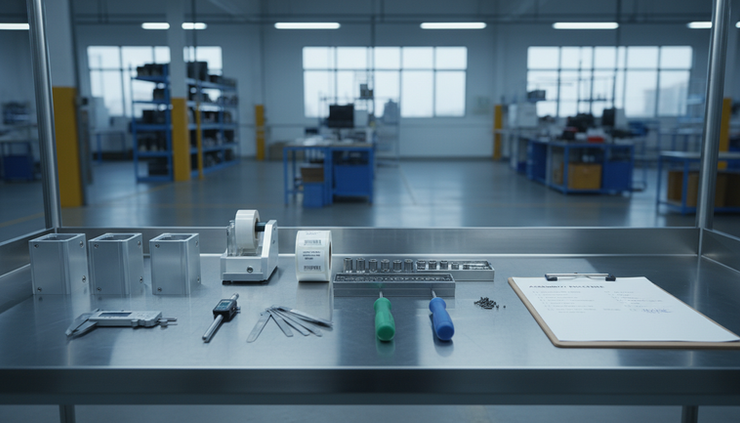
The file also protects importers and distributors
The manufacturer carries the main responsibility for preparing the technical documentation. Importers and distributors also have duties under CE marking rules. They need to take care that products they place or make available on the market are properly marked and supported by the required documents.
An importer may need to check that the manufacturer has carried out the appropriate conformity assessment, prepared technical documentation, applied the CE mark correctly, and drawn up the Declaration of Conformity. A distributor may need to act with due care and avoid supplying products that appear non-compliant.
They may not need to hold the full confidential technical file in all cases, but they should be able to obtain required evidence through the supply chain. This is especially important for private-label products, imported machinery, electrical goods, or products bought from suppliers outside the EU.
A weak documentation chain can create commercial risk. Goods may be delayed, removed from sale, or challenged by authorities. The visible CE mark will not solve those problems if nobody can produce the supporting evidence.
A practical way to build a stronger file
A useful technical file does not need to be complicated. It needs a clear structure and disciplined updates. The following approach works for many product types.
Start with the product definition
Begin with a controlled product description. Include intended use, user type, environment, technical limits, model variants, accessories, and exclusions.
This section becomes the anchor for the rest of the file. Every test, risk assessment, and instruction should connect back to it.
Map the applicable rules
Identify the CE legislation that applies to the product. Record the reasoning, especially where more than one rule may apply.
Then list the standards used. Keep the list realistic and current for the assessment date. If the product relies on alternative technical solutions, document the reasoning and supporting evidence.
Build the risk assessment early
Use the risk assessment to guide design decisions. Do not wait until testing is complete.
Record hazards, risk reduction measures, verification steps, and residual risks. Link each control to drawings, specifications, tests, labels, or instructions where possible.
Collect evidence as the design evolves
Keep design records under revision control. Store test reports, inspection results, calculations, supplier data, software references, and material information in a structured way.
For each document, it should be clear:
Which product or variant it covers
Which revision it applies to
Who produced it
When it was approved
Why it supports conformity
This simple discipline prevents later confusion.
Review the final file before signing the declaration
The EU Declaration of Conformity should not be treated as a routine signature. It is the formal legal statement that the product meets the applicable requirements.
Before signing, review the file for gaps. Check that the product name, model numbers, standards, legislation, manufacturer details, and evidence all align.
If a Notified Body is involved, make sure its certificate, assessment reports, and scope match the product and conformity route.
Keep the file alive
After launch, update the file when the product changes. Set review triggers for supplier changes, component substitutions, software updates, incidents, complaints, standard changes, and new markets.
A file that is not maintained becomes weaker each year. A file that is kept current continues to support the CE mark.
What good evidence looks like in practice
Good evidence is specific, traceable, and connected. It avoids vague claims and shows the route from requirement to proof.
For example, a strong file for an electrically powered machine may include:
A product description covering intended industrial use and operating limits
A risk assessment covering moving parts, electrical hazards, heat, noise, maintenance, and foreseeable misuse
Mechanical drawings with guard dimensions and safety distances
Electrical schematics with protective devices and component ratings
EMC test results for the final product configuration
Electrical safety test records
Software version control for safety-related behaviour
Supplier declarations for critical parts
Manufacturing inspection checks
Installation, use, maintenance, and warning instructions
The signed Declaration of Conformity
The strength comes from the links between these records. The risk assessment identifies an electrical hazard. The design shows insulation and earthing. The test report confirms performance. The production check confirms each unit is inspected. The instruction manual tells the user how to install and maintain the product safely.
That chain of evidence is what turns a CE mark into a defensible compliance position.
What happens when the file is missing or incomplete
An incomplete file can create serious consequences. The exact outcome depends on the product, risk level, market, and authority involved, but the risks are real.
A manufacturer may face requests for corrective action, sales restrictions, product withdrawal, recall, or other enforcement measures. Importers and distributors may stop supply until evidence is provided. Customers may reject deliveries if contract terms require CE documentation. Insurance and legal positions may also become harder to defend after an incident.
Even when no formal action follows, the business cost can be high. Teams lose time rebuilding records. Engineers are pulled away from current work. Sales are delayed. Supplier relationships are strained. Confidence in the product suffers.
The deeper cost is loss of control. If the evidence is missing, the manufacturer cannot easily prove what was assessed, what was approved, and whether the product on the market still matches the original compliance decision.
The Technical Construction File is a business asset
It is easy to see CE documentation as a regulatory burden. That view misses its practical value.
A well-built file helps product teams make better decisions. It helps quality teams manage change. It helps sales teams answer customer questions. It helps importers and distributors trust the supply chain. It helps leadership understand whether a product is ready for market.
Most of all, it supports the manufacturer’s legal claim that the product conforms.
The file can also shorten future development. When a company creates a new variant, the existing documentation can show what evidence may still apply and what needs fresh review. That does not mean copying old files blindly. It means using known evidence wisely.
A strong file also helps during audits, acquisition checks, supplier reviews, and product transfers. It gives the product a documented history that does not depend on one employee’s memory.
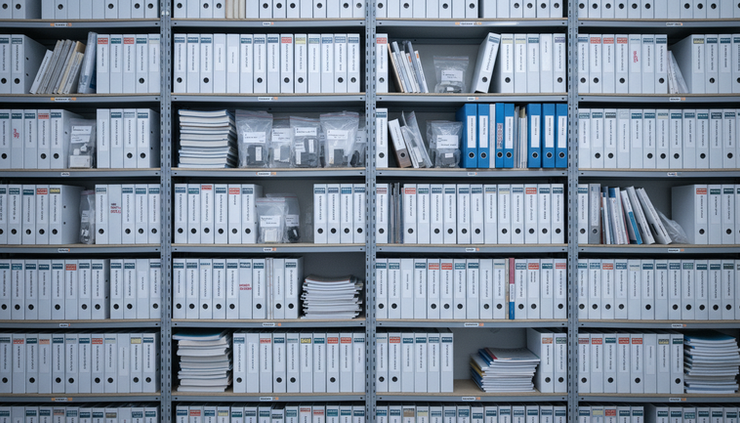
Treat the file as the evidence behind the mark
CE marking is a visible sign, but the Technical Construction File is the proof behind it. It shows that the product has been assessed, that the right rules have been considered, that risks have been reduced, and that evidence supports the declaration made by the manufacturer.
The best time to build the file is during design, not after launch. The best way to maintain it is through clear ownership, revision control, and regular updates when the product changes.
A CE mark without evidence is vulnerable. A CE mark supported by a complete, current, and product-specific file can stand up to questions from authorities, customers, and supply chain partners.
This article is for general information only and is not legal advice. CE marking requirements vary by product and applicable legislation, so product-specific review is always needed before placing goods on the market.


Comments